
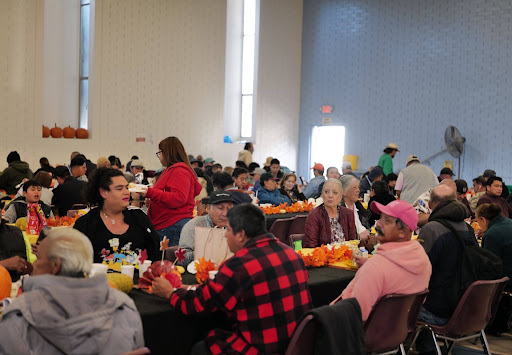
At St. Anthony’s Padua Dining Room in Menlo Park, neighbors can find a meal, groceries, and a warm welcome six days a week, 52 weeks a year. No questions asked, no one turned away.
Strengthening the System That Keeps Our Communities Fed
When a Palo Alto family wanted to help neighbors facing food insecurity, our team at PACF worked with them to turn their philanthropic goals into a coordinated community response, ultimately empowering $50,250 in grants to five organizations helping keep our community fed.
Using a networked approach to giving, we identified how their $30,000 gift could support organizations with distinct, connected roles in food distribution based on their philanthropic interests. This is one way PACF offers donors guidance tailored to their interests, helping them identify where and how their giving can make a difference. Their funds were complemented by $20,250 in funds from Silicon Valley Community Foundation’s (SVCF) Community Lifeline Fund, entrusted to PACF to draw on the organization’s local knowledge and nonprofit relationships. Together, these resources enabled coordinated grants across Palo Alto, East Palo Alto, and Menlo Park.
The grants supported Second Harvest of Silicon Valley, Avenidas, St. Anthony’s Padua Dining Room, Fresh Approach, and Peninsula Healthcare Connection’s Downtown Food Closet, five organizations helping neighbors access groceries, prepared meals, and fresh produce in different settings and at different stages of life.
The funding arrived at a critical time. Changes under H.R. 1 have narrowed eligibility and expanded work requirements for CalFresh, California’s food assistance program. According to the San José Spotlight, about 55,000 Santa Clara County CalFresh recipients could lose benefits under the new federal work requirements, adding pressure to local food providers as more neighbors risk losing help with their grocery bills.
The coordinated community response recognizes how our food assistance system works. Second Harvest serves much like a wholesaler, supplying food at scale through a regional network of community partners, at no charge to those partners. Neighborhood pantries and meal programs provide the local connections and accessible distribution points that help food reach people. Supporting both strengthens the system, from regional supply to the groceries and meals neighbors bring home.
“When community foundations, donors, and local nonprofits work together in a coordinated response, the real winner is the community,” Moses, Executive Vice President, Silicon Valley Community Foundation, remarks. “Through SVCF’s Community Lifeline Fund, we partnered with PACF to combine regional resources, trusted local relationships, and a Palo Alto family’s generosity. By supporting both Second Harvest and organizations getting food directly to neighbors, we are strengthening the system that helps keep our community fed.”
This partnership reflects a connection between regional resources and local relationships. A family brought a desire to address food insecurity and additional support. SVCF brought funding to address urgent needs. PACF brought local knowledge and helped shape an approach that supported both food supply and distribution directly to neighbors.
. . .
If you want to help keep neighbors fed this holiday season, here are a couple of opportunities to support in partnership with our grantee partners:
- Peninsula Healthcare Connection | Volunteer, Provide a Cooked Turkey, or donate food and supplies
- Avenidas | Donate to the Food Drive
- St. Anthony’s Dining Room | Volunteer for Food Prep or Dining Service